Leadership 2020
IEEE Rising Stars Keynote
My first time on the IEEE Rising Stars stage - a double-keynote with my friend Jonathan Chew on machine learning, its implications, and what engineers should do to meet the challenges of the coming decade.
- Public Speaking
- Machine Learning
- Leadership
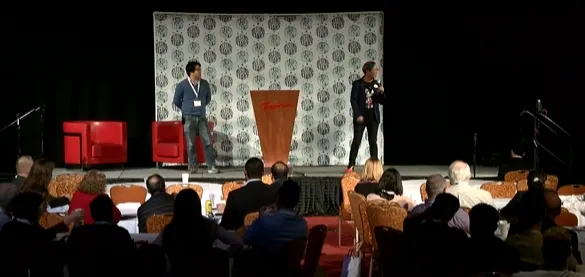
This was my first time working with the organizers at IEEE Rising Stars, and the start of a relationship with the conference that would carry on for years. I shared the keynote stage with my good friend Jonathan Chew - the same partner I’d written Secrets to Being a World-Changer with - for a morning double-keynote to a room full of young engineers.
The talk
I spoke about machine learning - where it was heading, the implications of handing more and more decisions to it, and what engineers ought to do to meet the challenges of the next decade. The thread running underneath it was the one Jonathan and I always came back to: technology keeps inventing new kinds of work, and the people who thrive in it are the ones who can pair real technical depth with creativity and imagination. The “technical creative” - someone who can dream, design, and execute with vision and passion.
Billed as “The Hidden Lenses of Success,” the session was about the forces that quietly shape a career: how you communicate, what employers are actually looking for, and the discipline of keeping your courage and your dreams at the front of the journey rather than letting them get crowded out.
How it landed
The organizers described the morning as an invigorating and lively one, aimed at inspiring IEEE Young Professionals to chase careers at the intersection of innovation and engineering. At the time I’d recently moved from Walt Disney Imagineering - where I’d been a Ride Controls Engineer on Shanghai Disney Resort - to Nusano, a startup building radioisotope production for cancer therapies. So the message wasn’t abstract: it came straight out of having lived in research groups, startups, established companies, and multinationals, and finding the same “technical creative” mindset useful in every one of them.
Speaking alongside Jonathan to that audience - and getting to make the case that the next decade belonged to engineers willing to think creatively about machine learning - is one of the talks I’m most glad I said yes to.