One Year With Claude
A year ago my friend Jon showed me Claude. Here's what I built, how the way I work changed, what went wrong, and what I did with the time it gave back.
In 2020, I gave a keynote at IEEE Rising Stars built on one premise: AI and automation would unburden us from routine cognitive work. On December 2nd, 2025, I started finding out what that actually feels like.
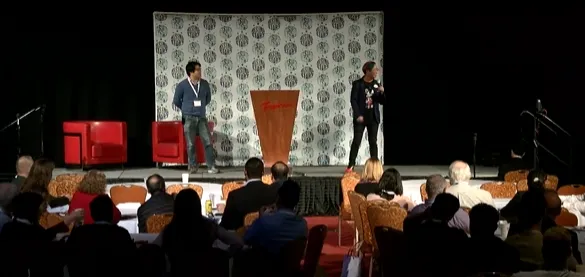 On stage at IEEE Rising Stars, 2020.
A year later, working with LLMs has been one of the most educational and inspiring years I’ve ever had, and it has meaningfully shaped my life. I’ve built things I had filed under “later” for years, and the ones I’m proudest of are used by other people. I’ve been able to express myself in new ways, explore and showcase ideas, and learn to ask the right questions.
The year in numbers:
- 37 project repos on my home server
- 3,850 issues tracked. I wrote about 1,000, and Claude wrote about 2,700 more, breaking my work into steps
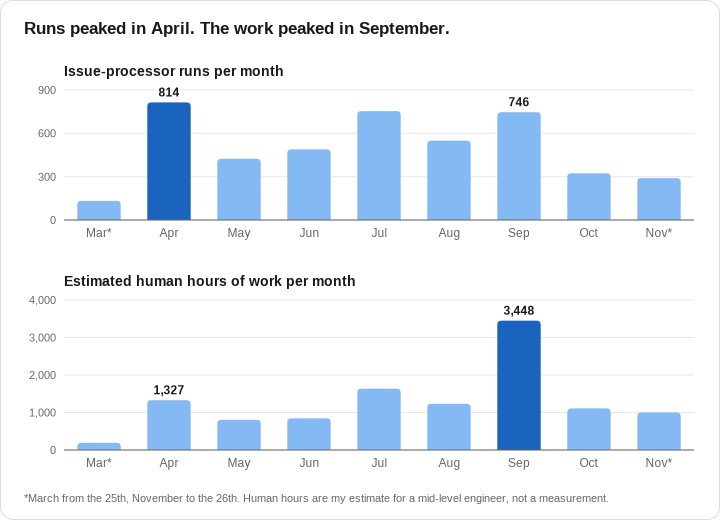
- 4,900 runs of an issue processor that works through my queue on its own, closing about 3,300 issues
- About 530 hours of Claude working on its own did what I estimate as about 12,000 hours of human work, roughly six years of a full-time engineer
The site you’re reading is built the same way. This Site, By the Numbers shows the pipeline behind it.
How did I start?
My co-workers had been telling me that AI was steadily improving and getting more capable. Curious, I asked my good friend Jon to show me some of what he’d been learning so I could try it for myself. I spent an afternoon with him, setting it up in VS Code and downloading Claude desktop for the first time.
The first week was eye-opening. Jon gave me an initial set of instructions, which I gave to Claude to help me design and build an Obsidian plugin that looks up restaurants on Google and places them into my notes. As an avid note taker, I’ve been taking those notes manually, knew that automation was possible, but just never had the time to do the research and execute it. With Claude, I had it working in 90 minutes. With Claude Code focused on execution, I focused on design, testing the tool, and surfacing feedback.
The next night, Michelle and I came up with four or five project ideas. By the end of that first week, I had burned through my first $10 of extra usage. It quickly became clear that the VS Code integration wasn’t as useful as Claude Code itself. Within a few days, I stopped looking at the code. I focused on directing the result, and only looked at the code when I needed to.
What did I actually build?
The new possibilities excited me. Many of the ideas I never had the time for were suddenly within reach. As I kept exploring, I started using it to solve everyday problems too. I used it to help plan a trip to Palm Springs, and Michelle used it to research local ordinances for a contract.
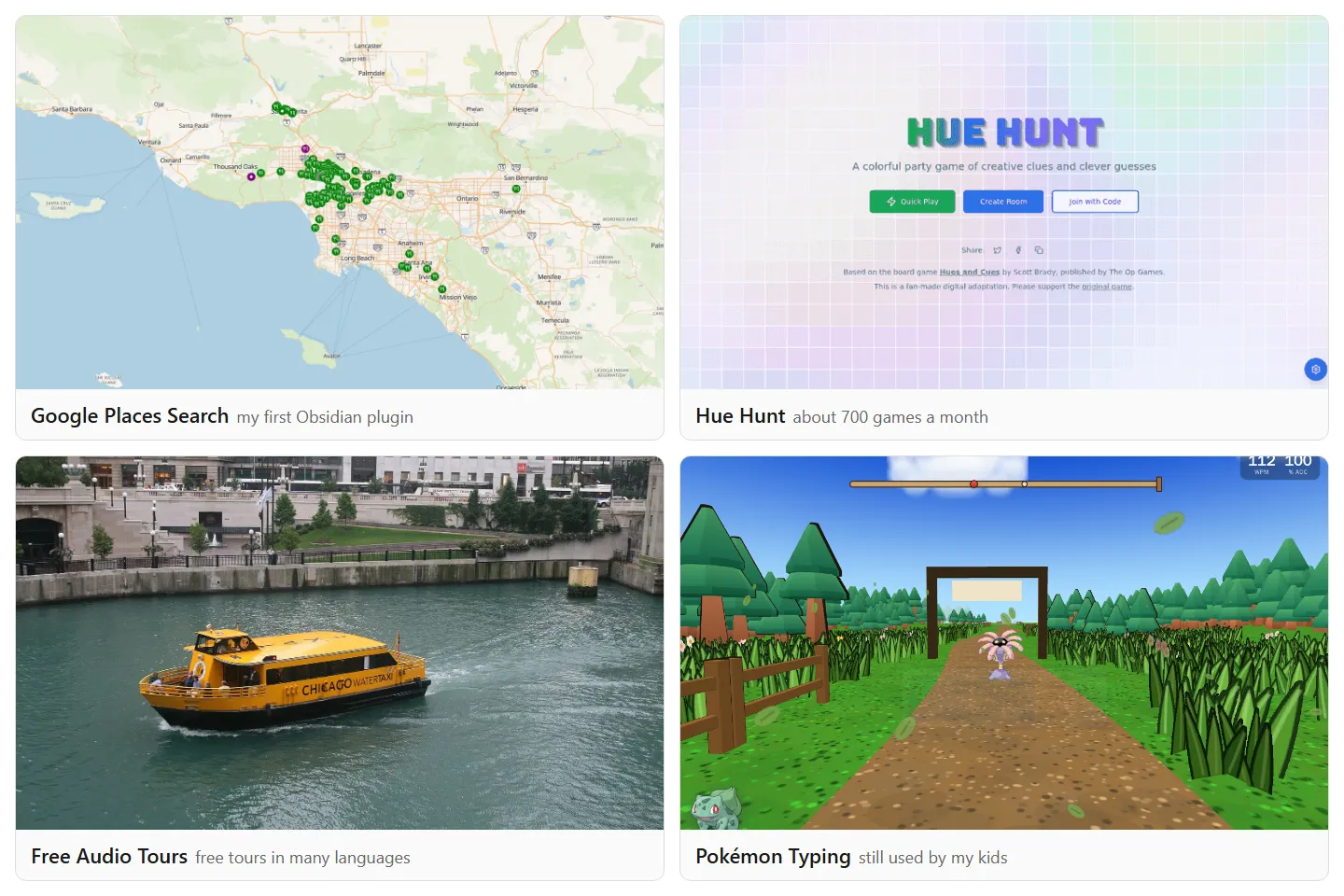
I used it to put things into reality that I had always filed under “later”. I’m especially proud of the projects meant to help others:
- Google Places Search: my first Obsidian plugin, and my first contribution to the open source community
- Hue Hunt: a multiplayer party game that now hosts about 700 games a month
- Free Audio Tours: free tours that help travelers learn about a place, with a core set of languages for each one
- Pokémon Typing: a typing game my children still use today
How did the way I work change?
I was excited to test the limits of what this tool could do, and every time, it surprised me.
“A computer program does what you tell it to do, not what you want it to do.” Arthur Bloch, Murphy’s Law and Other Reasons Why Things Go Wrong (1977)
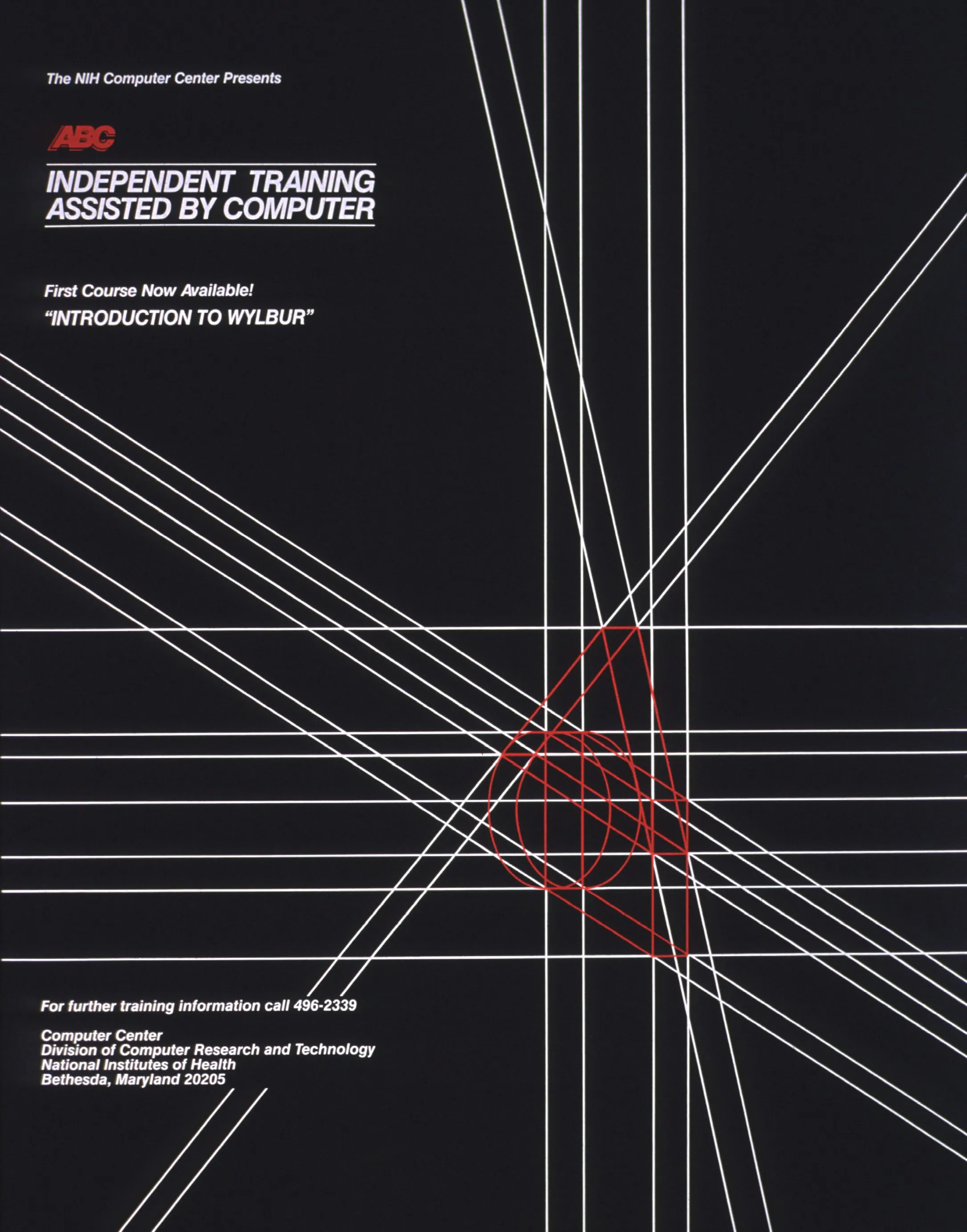 “Independent Training Assisted by Computer”, NIH Computer Center, 1969. Public domain, via the National Library of Medicine.
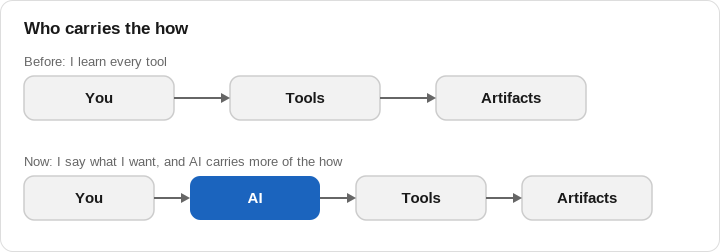
For most of my life, that was the deal. Computer class in high school taught me that the burden was on me to know exactly how the computer expected to be told. Today, that means knowing dozens of apps across phones, tablets and desktops, each with its own habits. AI changes who carries that burden. Historically it was you > tools > artifacts. Now it’s you > AI > tools > artifacts. For the first time, I can tell the computer what I want it to do, and it figures out the how.
I was reading Will Guidara’s Unreasonable Hospitality around the same time, and it made me see LLMs as a new form of computing built around hospitality. The computer adapts to me, instead of me adapting to it. When I establish a preference, the system remembers and learns to give me results in the way I want the next time.
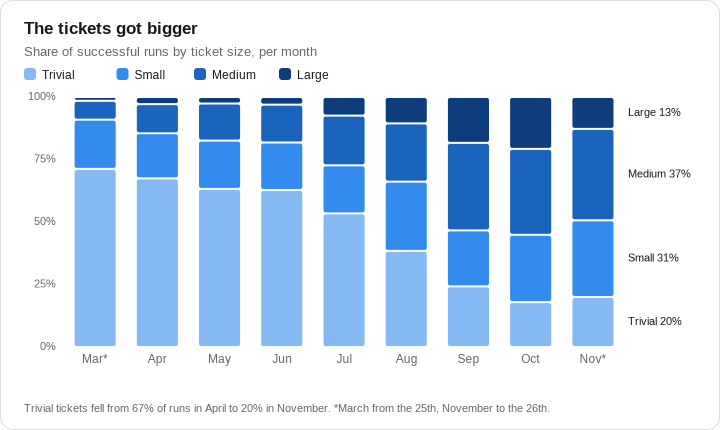
In practice, my days changed shape. I stopped writing code and started writing issues. A processor on my home server works through them while I’m away, and I review what comes back. Over the year, the tickets got fewer and bigger. Early on, most were small fixes. By the fall, most were a day’s work each, broken out of a plan I had approved. I was always trying to push my leverage higher - to get bigger plans that resulted in larger scopes of work in between tests. And as I presented greater and greater challenges, the models were also getting better and better, keeping pace with my ambition.
What went wrong?
There were a few hard lessons. An early project took three times longer than it should have, because Claude couldn’t read the spec PDF and didn’t tell me. Another time the scope was far too big, and after days of heavy token use I ended up with something completely unusable.
As side projects turned into things people actually used, I had to learn to troubleshoot them like production systems. And I hit my usage limits more than once. One day in July, my notes just said “No AI Wednesday (because I’m out of usage)”.
The most important lesson has been pacing myself. In a lot of ways, working with Claude is like working with the world’s most over-achieving engineer. I’ve had to learn to recognize that I’m mostly doing this for myself, be okay with it when the work piles up, and to take the time to log off.
What did it do for me beyond code?
This year, Claude spent about 530 hours working through my queue while I was doing something else. I estimate the same work would have taken a person about 12,000 hours. That’s roughly six years of a full-time engineer, handed back to me in one year.
So what do you do with that time?
Unburdening myself from the execution has opened up space to learn things that aren’t just additive to my existing experience. When I built my website portfolio in 2010, my goal was to create a beautiful website, but what I could actually afford to learn was the technology behind how web pages work. It was necessary to reach the goal, but it wasn’t what I had set out to do. In the end, I settled for a template, given the unreasonable amount of work it would have taken to build something from scratch.
This year, the approach was completely different. When I revisited my portfolio, I didn’t focus on the technical side of building a website. I spent the time thinking through the design and how I wanted to represent myself. I spent far more time on the decisions only I could make, the ones that made it personal and authentic. AI helped me create a more authentic representation of myself, by freeing me from the tasks that didn’t represent me.
I often measure how good a year has been by how much I’ve learned, and this has been one of my best. I’ve worked with far more areas of technology than before, and my confidence in approaching and solving problems has grown dramatically, simply because of how many problems I’m solving at any given time. It has fed my curiosity, and let me experiment with different problems in the limited time I have.
How did it show up at work?
Working with Claude at work has been different from working with it alone. It’s about both evangelizing the tool and listening. I currently lead the AI Steering Committee at Nusano, and a large part of that role has nothing to do with using AI at all. It’s about understanding the problems people face, and finding ways to help them without taking over.
That journey is less about personal accomplishment, and more about empowering others.
What did I learn?
- Pace yourself. Claude is the world’s most over-achieving engineer. You have to be the one who logs off.
- Check that it read what you gave it. One early project took three times longer because it couldn’t read the spec PDF and didn’t say so.
- Keep the scope small. The one time I went too big, I burned days of tokens on something unusable.
- Spend your time on the decisions only you can make. That’s what made my new portfolio feel like me.
- At work, listen before you evangelize. The job is helping people with their problems, not taking them over.
- You own the output. Whatever the tool produced, you’re the one standing behind it.
What’s next?
The one word that defined my first year with Claude is leverage: learning to use AI across all of my professional and personal work. It has been a journey of discovery, learning, and growth.
The word for year two is focus. I expect it to contract, so I can focus on the things that truly matter to me and make them high quality. I’m excited to see what I learn from that.
Whatever next year brings, I want to keep using Claude as a way to learn, to create, and to build tools that help others.